|
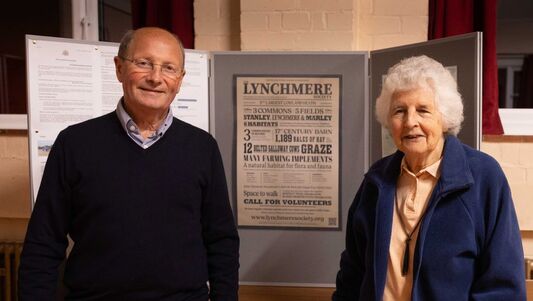
The Lynchmere Society, a group of volunteers from all walks of life who share a mutual love of nature and appreciation of this unique habitat.
|
Volunteer with us
We host regular volunteer parties and every hour you can spare really helps. |
|
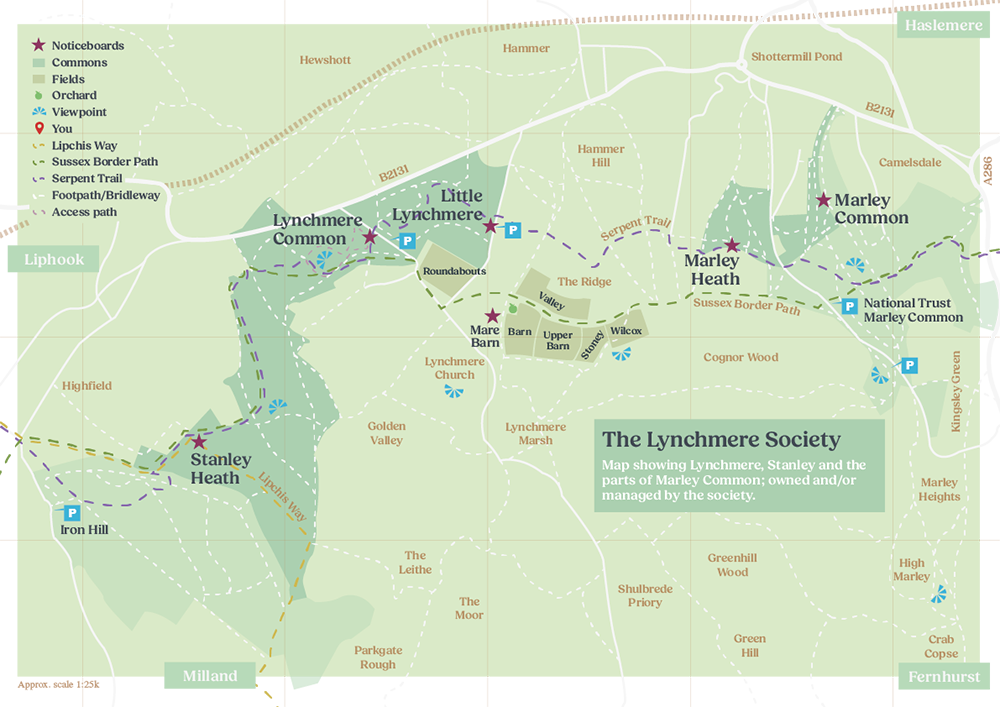
The society purchased 125 hectares (307 acres) of Stanley, Lynchmere and Marley Commons in 1997 using both; local residence contributions and a Heritage Lottery Fund grant, on the condition that the commons were restored to lowland heath.
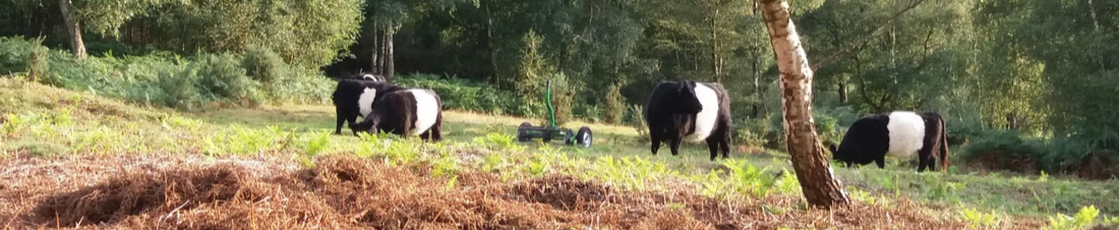
The volunteers collectively organise and maintain the local nature reserve featuring open lowland heath with acidic, poor soil that supports a wide and diverse range of flora and fauna. In addition to managing the heathland, The Lynchmere Society is working to improve the quality of the woodland areas, much of which was overrun with scrub growth. Remnants of possible ancient wood-pasture have been detected around the edges of Stanley Heath, and we have begun thinning areas like this to rejuvenate and improve the habitat, reintroducing hazel and birch coppices. Before the society originated, the commons were overgrown with scrub birch, scots pine and dense bracken. Only a few isolated areas of heather clung on in clearings, largely through the care of local residents. Today, three types of heather are thriving. Restoration of the Commons has now created the fifth largest area of lowland heath, in West Sussex and a key habitat for rare heathland species. Cattle grazing is a large component in the long-term sustainability of the commons. Belted Galloway cows have been grazing in the fenced areas since March 2005, contributing greatly towards management of the commons to the present day. The commons and the land in-between provide great walking and a place to breathe. They are crossed by several footpaths and bridleways as well as two long-distance paths – The Sussex Border Path, The Serpent Trail and Lipchis Way – which connect this flourishing heathland in West Sussex. |
Become a Member
Help preserve and maintain our Commons. |
|
Corporate Volunteering
If there are organisation who would like to volunteer as part of their environment, social and governance policies we’d love to hear from you. Email Mike McCart: macsshed@icloud.com Mobile: 07931 730020 |
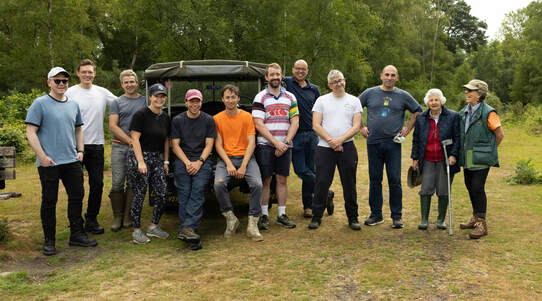
Lynchmere resident David Bateman, Chief Investment Officer of REIT Primary Health Properties PLC volunteered some of his team’s muscle power to help clear bracken on the Commons as part of his Company’s commitment to their Environmental, Social and Governance (ESG) agenda.
|